The Key as an Object: Handovers, Duplicates and Losing One
The key is both a small piece of hardware and the physical token of an agreement. Treated as hardware it needs decisions about who holds it, how many copies exist and how it travels. Treated as a token it collects meaning simply from being handed over, put away and taken out again.
The key in a keyholding dynamic is two things at once. It is a small piece of stamped metal that opens a lock, and it is the physical token of something two people agreed to. This guide is about the first of those: what actually happens to the key, who ends up holding it, how many copies there are, how it moves around when people travel, and what it comes to mean through being handled that way. The decorative side, the key worn as a pendant or a charm, already has its own guide in chastity key jewelry, rituals and symbols. This one is about the thing that opens the lock.
What the key actually is
Most devices close with either a small padlock or an integrated barrel lock, and the key matches: light, short, easy to lose in a pocket or a bag. Locks of this kind usually arrive with more than one key, because manufacturers assume people mislay them. That detail shapes the first decision a couple makes, which is what to do with the spares before anyone has thought of them as spares.
The two lock types behave differently when things go wrong. A standard padlock is generic, so a lost key is a nuisance that ends with a replacement lock. An integrated lock with its own key is a closed system, and losing every copy is a much larger problem. Knowing which one you own is worth five minutes now rather than an hour of panic later.
Handing it over
The handover is the moment most people remember, and it is worth doing deliberately rather than in passing. The practical part is the conversation that goes with it: where the key will live, whether the wearer will be told where, who else knows, and what happens to it when either person is away. Writing that down alongside everything else is ordinary practice, and keyholder rules and contracts covers how couples usually put it on paper.
Two shapes are common. In the first, the keyholder carries the key, on a chain or in a bag, so it goes wherever they go. In the second, the key goes into a container at home and neither person carries it around, which removes a whole category of small daily risks. Neither is more serious than the other. They just fail in different ways.
Wearing the working key
Some keyholders wear the functional key rather than a stand-in. The appeal is obvious and the practical cost is equally obvious: the key then goes into showers, swimming pools, gyms and the sea, on a clasp that was designed for jewelry rather than for security. People who wear the working key tend to end up keeping a second copy at home for exactly that reason, which quietly turns the worn key into the one that could be lost without consequence.
If you want the meaning side of that choice, the rituals guide covers it properly. The point here is narrower: a key that is worn is a key that is exposed, so decide in advance whether losing it would be an inconvenience or a crisis.
Duplicates and who holds them
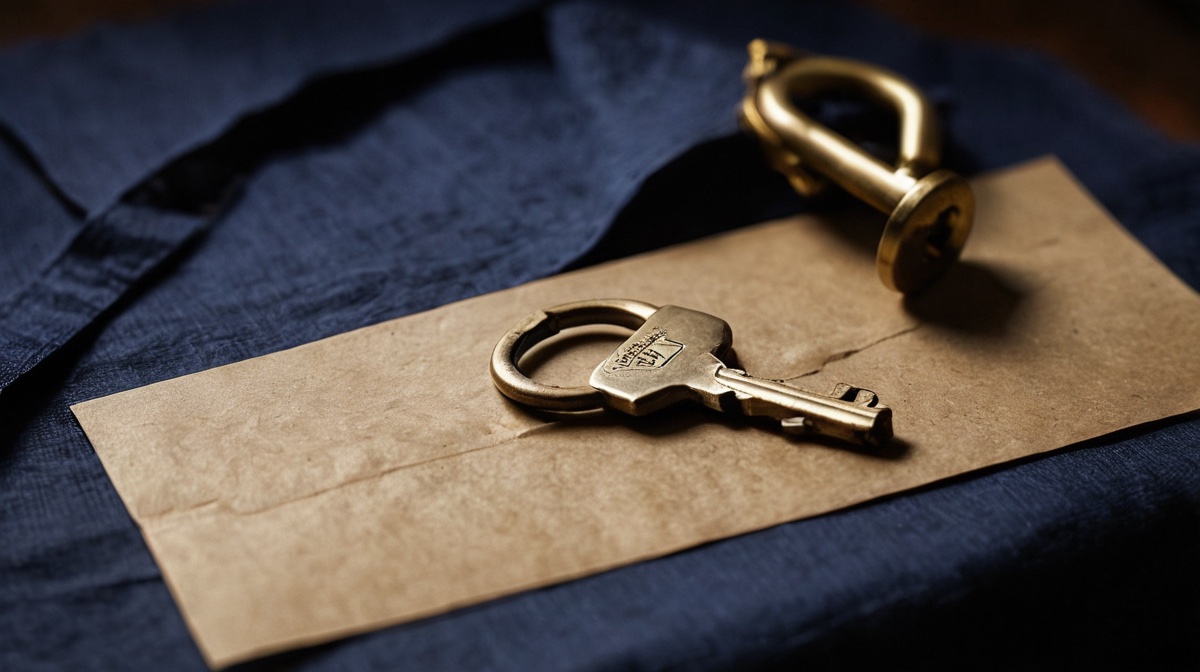
This is where the object meets safety. Every locked arrangement needs a route out that does not depend on anyone being reachable, and the spare key is usually how that route is built. The sealed-key method, where the wearer holds a spare inside a signed envelope or tamper-evident bag, is the standard answer and is set out in full in chastity emergency unlock. There is no point repeating it here.
What is worth adding is bookkeeping. Count the keys. Decide how many exist, agree where each one is, and revisit it when anything changes. Couples who never count end up with a key in a drawer that nobody remembers putting there, which is not strictness and not safety either. It is simply an untracked object that both people would rather not think about.
When somebody travels
The wearer travelling is the version everybody plans for, and chastity and travel covers scanners, discretion and hygiene on the road. The version people forget is the keyholder travelling. If the only key leaves the house in someone else’s hand luggage, the wearer’s emergency route has gone with it, and that is the sort of thing noticed at eleven at night rather than before the taxi arrives.
The fix is unglamorous. Before either person goes anywhere, say out loud where every key will be for the duration. A trip is also a perfectly reasonable moment to unlock, and experienced couples treat that as a scheduling decision rather than a failure of nerve.
Posting a key

Keys do travel by post, mostly in long-distance dynamics, often around visits: the key goes home with one person and comes back before the next one. Some couples make the delay itself part of the arrangement, since a key in transit is a fixed period nobody can shorten by arguing.
Handle it as slow and fallible. Post goes astray, tracking is only a record of where something used to be, and customs, weekends and public holidays all add days that nobody counted. Small metal objects also work their way out of a paper envelope, so tape the key to a piece of card inside a padded one. Above all, a posted key is never the emergency route. The physical way out stays at the wearer’s end, exactly as it does in any other remote setup, and long distance keyholding covers the wider question of running a dynamic on trust and post.
Losing one
It happens, and often. If a spare exists and is accounted for, a lost key is an inconvenience: use the spare, replace what is missing, note the new count. That is the whole argument for the spare, and it is why a keyholder who treats a backup as a betrayal has the priorities backwards.
Tell your keyholder immediately. The instinct to quietly search the flat for two days before mentioning it is understandable and makes everything worse, because it hides a safety problem inside an embarrassment. If no spare exists, the answer depends on the lock. A standard padlock is a locksmith’s routine job, and locksmiths are not shocked by much. Anything involving pain, swelling, broken skin or a device that will not come off is a matter for medical care rather than for tools and hope. This is general information rather than medical advice.
What the object comes to mean
Nothing about a key makes it meaningful. It gets there through handling: passed from one hand to another, put somewhere specific, taken out again, checked for absent-mindedly. Repetition does the work, in the same undramatic way that a wedding ring is only a ring.
Why a small object should carry that weight is not something anyone can explain convincingly from the inside, and the honest answer is that this is a description rather than an explanation. The plainest version people offer is that a physical thing is easier to keep believing in than a conversation, because it is still there in the morning. That is probably enough. It is also why the practical decisions in this guide are worth making carefully: the object is doing more work than its size suggests, and it is a great deal easier to keep track of it than to explain later where it went.
Questions people ask
How many chastity keys should exist?
As many as your safety plan needs and no more, with every one of them accounted for. A common shape is two: the working key with the keyholder and a sealed spare the wearer can reach in an emergency. The number matters less than knowing it, because an uncounted key in a drawer somewhere is neither safe nor secure.
Is it a good idea to post a chastity key?
Plenty of long-distance couples do it, usually around visits. Treat it as slow and fallible rather than reliable: post goes astray, tracking only records where something was, and customs and holidays add days. A posted key must never be the wearer's only route out of the device.
What happens if you lose the key to a chastity device?
If a spare exists, this is an inconvenience rather than an emergency, which is the entire argument for having one. Tell your keyholder straight away instead of hiding it. Without a spare, a locksmith is the usual answer for a standard padlock, and anything involving pain, swelling or broken skin is a reason to seek medical care rather than improvise.
Who should hold the spare key?
Whoever can actually reach it in a crisis. That is usually the wearer, holding it sealed so that opening it leaves evidence, or a trusted third party who has agreed to hand it over without questions. A spare held only by a keyholder in another time zone is a spare in name only.
Take it past the reading
Guides give you the shape of it. People give you the rest. Find others who are open about keyholding and looking for the same arrangement.
Find a keyholder →