Chastity Emergency Unlock: Why You Always Need a Way Out
A chastity emergency unlock is a guaranteed way to get a device off fast when something goes wrong. Every locked arrangement needs one, whether a backup key within reach or a trusted person who can send it, and using it in a real emergency never counts as cheating.
Every locked chastity arrangement needs a guaranteed way out. A chastity emergency unlock is exactly that: a reliable method to get the device off quickly when something genuinely goes wrong, without waiting on anyone’s say-so. This is the most important rule in the whole practice of keyholding, and no responsible keyholder treats it as optional. What follows is general safety information, not medical advice; for any medical worry, speak to a doctor or pharmacist.
Why there must always be a way out
A chastity device is worn on the body, sometimes for long stretches, so the ordinary things that happen to bodies still apply. Skin gets irritated, swelling happens, illness arrives without notice, and life throws up hospital trips and house fires that do not care about a scene. A wearer who cannot get free in one of those moments is in real danger, not deeper into a kink. The way out is what makes everything else safe to enjoy.
This is why control and safety sit on separate tracks. A keyholder can hold genuine authority over release while the wearer still keeps a physical route to freedom for emergencies. Those two things do not clash. Any keyholder who tells you otherwise, or who treats a backup key as a betrayal, has misunderstood the role, and how to be a good keyholder explains why that attitude is a red flag.
Backup keys and the sealed-key method
The simplest safety net is a spare key the wearer can reach. The worry people raise is obvious: if the key is right there, where is the restraint? The sealed-key method answers that neatly. The wearer keeps the spare, but seals it inside a signed, dated envelope, a tamper-evident bag, or a small lockbox with a numbered tag. The key stays available for a true emergency, yet opening it leaves clear evidence. Trust stays intact because both people can see the seal is unbroken.
For many couples this is the whole solution. The keyholder holds the working key and the authority; the wearer holds a sealed spare for the day something goes wrong. If it is ever opened for a real reason, that is not a failure of the dynamic. It is the safety system doing its job.
The trusted-third-party method
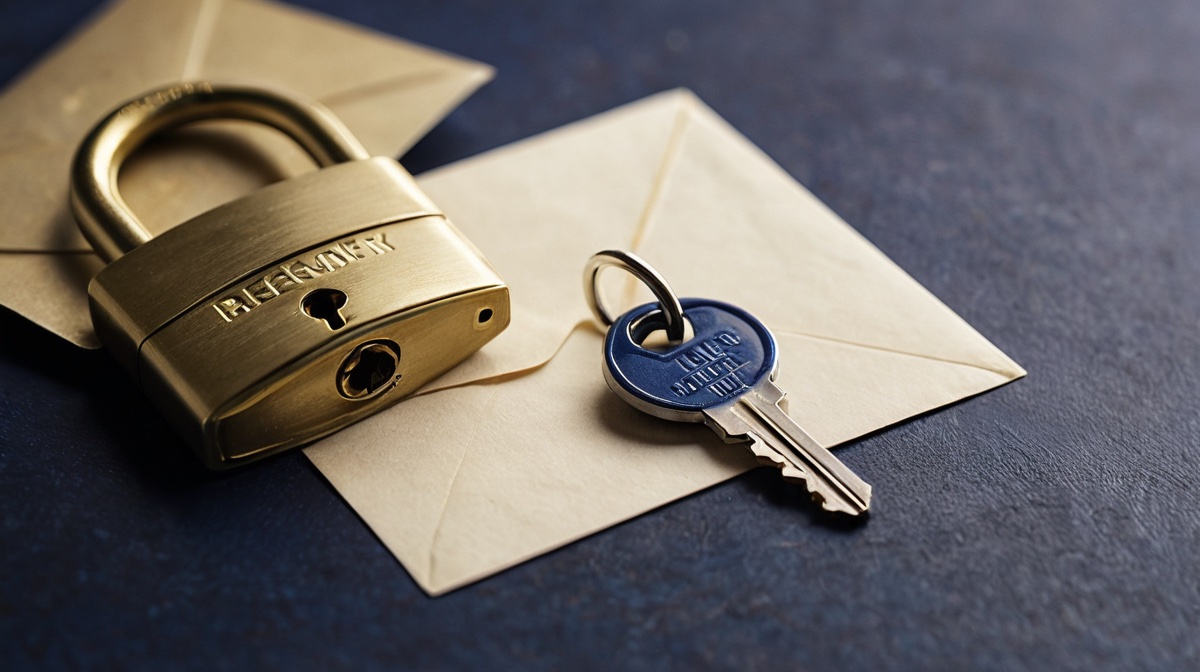
When the wearer should not hold their own spare, a trusted third party can. This is a friend or contact, agreed by both people, who keeps a key and will send or bring it if asked. It suits stricter dynamics and long-distance ones, where the keyholder cannot physically step in. The long-distance keyholding guide goes deeper into remote setups.
Choose that person carefully. They must be reachable, discreet, and clear that if the wearer asks for the key in an emergency, they hand it over without quizzing them. Vetting matters here as much as it does when choosing a keyholder in the first place, a subject covered in vetting an online keyholder.
Emergencies that never count as cheating

Some situations override every rule, every timer, and every agreement. Using the emergency unlock in any of these is never cheating and never something to apologise for. Medical trouble comes first: pain that is more than mild, numbness, discolouration, cuts, swelling that will not settle, or any sign of infection. A trip to hospital, or any procedure where staff need the device off. And the plain fire-drill category: a fire, an evacuation, or any genuine crisis where seconds count.
Agree all of this in advance and write it into your rules, the way a good keyholder builds the exception in from the start rather than improvising. That planning is part of what a keyholder does. When both people have said clearly that safety always wins, the wearer never has to hesitate or feel guilty in the moment that matters most.
Failure planning: quiet apps, quiet keyholders and travel
Plans fail, so plan for the failure. If your dynamic runs through an app, ask what happens if it breaks, loses your data, or a release code never arrives. The answer is always the same: the physical emergency unlock is the backstop, and it does not depend on any software working.
The same goes for a keyholder who goes quiet. People lose signal, get ill, or simply drop off for a while. Agree in advance how long the wearer waits before using their emergency route, and make clear that using it after a genuine silence is sensible, not disloyal. Travel deserves its own thought too. Airport security, long flights, and unfamiliar places all raise the odds of needing out quickly, so many wearers travel unlocked or carry their sealed key rather than risk it. When you are ready to talk any of this through with people who have been there, the community forum and the wider guides are good places to start.
Questions people ask
Does using an emergency unlock count as cheating?
No. Using your emergency route in a genuine medical problem, a hospital trip, a fire, or any real crisis is never cheating and never something to apologise for. Agree this in advance so the wearer never has to hesitate when it matters most.
What is the sealed-key method?
The wearer keeps a spare key but seals it inside a signed, dated envelope, a tamper-evident bag, or a tagged lockbox. The key stays reachable for a true emergency, yet opening it leaves clear evidence, so trust stays intact while safety is guaranteed.
What if my keyholder or the app goes quiet?
Plan for it in advance. Agree how long the wearer waits during a silence, then use the physical emergency unlock, which never depends on any software or any person being reachable. Using it after a genuine silence is sensible, not disloyal.
Take it past the reading
Guides give you the shape of it. People give you the rest. Find others who are open about keyholding and looking for the same arrangement.
Find a keyholder →