How to Ask Your Partner to Lock You Up: Scripts and Timing
To ask your partner to lock you up, frame it as trust you want to hand them rather than a favour you need. Explain that you want them to hold the key and the decisions, pick a calm private moment well away from the bedroom, and keep the first ask short and honest. Give them room to react, and treat a hesitant or negative answer as information, not rejection.
To ask your partner to lock you up, frame the whole thing as trust you want to hand them, not a favour you need them to grant. What you are really asking is for them to hold the key and, with it, a real say over you. Said the right way, that is a compliment, not a burden. Pick a calm, private moment nowhere near the bedroom, keep the first ask honest and short, and give them plenty of space to react. A hesitant answer is information, not a verdict.
Frame it as trust you are offering them
The instinct is to ask for the lock. The better move is to offer the role. Those sound similar and land completely differently.
When you ask to be locked up, you put your partner in the position of granting your kink. When you tell them you want them to hold the key, you are handing them something: your trust, and a piece of control over your body that you are choosing to give away. Most people find the second version far easier to receive, because it centres what they gain rather than what you want. That role has a name and a shape, and pointing your partner to what is a keyholder and what does a keyholder do can turn a vague, slightly alarming request into something concrete they can picture themselves doing.
Be specific about what the trust means. You are saying you want them to decide when you are unlocked, that you will keep your word about it, and that you trust them with that power because of who they are. Framed like that, the ask is closer to devotion than to a demand.
Get the timing and the setting right

Where and when you raise this matters almost as much as the words. Do not spring it in a heated moment, when it will sound like a script you need performed on the spot. Do not bury it in a text either.
Choose a relaxed, ordinary time. A quiet evening, a long drive, a slow morning. Somewhere private, unhurried, and emotionally calm. The point is to signal that this is you being open with them, not you angling for something. Lead with the feeling before the mechanics. Say what draws you to it, the anticipation, the closeness, the pull of handing over control, and let that sit before any mention of a device. If you want a fuller map of how to open the subject, first conversations with a keyholder walks through it step by step.
Then stop and let them respond. Silence is fine. You have had months or years to get comfortable with this idea. They are hearing it now.
Say it in plain words, and have a script ready
Rehearsing a little helps, as long as you do not deliver it like a speech. Something honest and simple works best. You might say that you have been thinking about handing them the key, that the idea of them deciding when you are unlocked appeals to you, and that you trust them completely with it. Then ask what they think.
Answer their questions straight. Expect the obvious ones. How long, how often, what if there is an emergency, what does this mean for our normal sex life. You do not need every answer mapped out, and in fact it is better if you do not, because the arrangement should be built together. If they warm to it, that is the moment to start shaping the details as a pair, which is exactly what keyholder rules and contracts and how to be a good keyholder are for. Keep the first conversation about willingness, not fine print.
Handle whatever answer you get
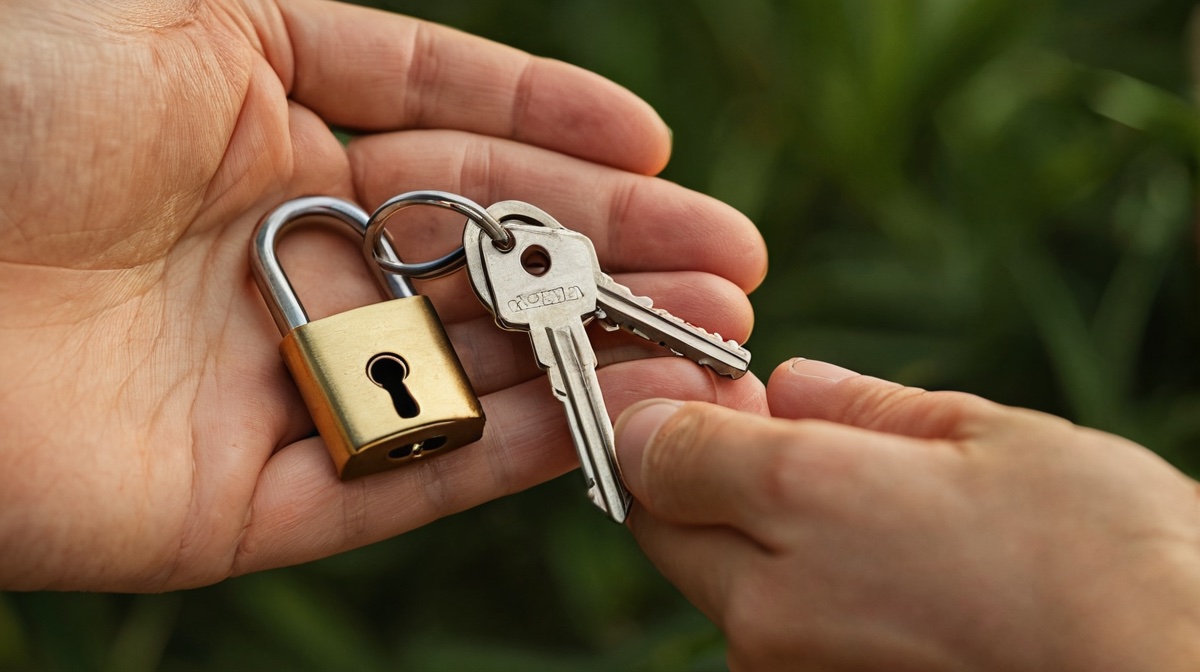
They might say yes, and if so, go slowly and let them grow into the role. They might need time. Being handed authority over someone is a strange thing to receive, and a thoughtful partner often wants to sit with it before committing.
They might say no. If so, take it cleanly. Do not sulk, do not keep raising it until they cave, and do not treat their reluctance as a flaw. Some partners simply do not want the responsibility, and that is a fair choice, not a failure of love. You can revisit it lightly much later, or explore the solo path instead. Whatever the answer, keep talking about it the way healthy couples talk about everything, which communication in a chastity relationship covers in depth. The ask is a good one to make. The relationship is worth more than the answer.
Questions people ask
How do I ask my wife or partner to keep me locked?
Raise it as something you want to give them rather than something you want from them, and say plainly that you would like them to hold the key and make the call on release. Choose a relaxed, private moment and keep it low-pressure. Then let them ask questions and take their time, because being handed real authority is a lot to sit with at first.
What if my partner is not interested in being a keyholder?
Accept it without punishing them for it, and remember the role asks real things of them that not everyone wants. You can revisit it gently much later, or explore locking on your own instead. What you should not do is keep pushing until they agree just to quiet you, because a reluctant keyholder rarely enjoys the role.
Is it weird to want my partner to control when I finish?
No, it is a common desire and a very old one. Wanting a trusted partner to hold that decision is about closeness and surrender, not dysfunction. The thing that matters is that you both actually want the arrangement, not that the wish itself needs justifying.
Take it past the reading
Guides give you the shape of it. People give you the rest. Find others who are open about keyholding and looking for the same arrangement.
Find a keyholder →